
Hiring a website development agency in Mumbai is no longer just about getting a few pages designed and published. In 2026, a business website often needs to work as a sales tool, customer touchpoint, information hub, and foundation for future digital products. Businesses exploring these options can learn more about 4Byte Agency, a Mumbai-based website and software development company serving startups and established businesses.
Whether you are launching a new business, redesigning an outdated website, or building a more advanced web platform, understanding the development process can help you set realistic expectations around planning, technology, timelines, cost, and post-launch support.
A well-planned website can also become the starting point for a wider digital product strategy, especially if your business may eventually need mobile apps, SaaS products, or automation.
What Does a Website Development Agency in Mumbai Actually Do?
A professional website development agency in Mumbai handles much more than visual design.
Depending on the project, the team may be involved in:
Understanding your business and target users
Planning the website structure and pages
Creating the user experience and interface
Developing the frontend and backend
Connecting databases, APIs, CRMs, payment systems, or other tools
Making the website responsive across devices
Improving loading speed and technical performance
Setting up basic technical SEO foundations
Testing functionality before launch
Deploying the website
Providing maintenance and technical support
The exact process depends on the type of website being built. A five-page business website and a custom web application should not be approached in the same way.
What Should Happen Before Development Starts?
One of the biggest differences between a rushed website project and a well-managed one is what happens before coding begins.
1. Discovery and Requirements
The development team should first understand what you actually need.
This usually includes questions such as:
What does the business do?
Who will use the website?
What action should visitors take?
What pages are required?
Do you need integrations?
Will the website need a CMS?
Do customers need accounts or dashboards?
Will the website connect with existing software?
What needs to happen after a user submits a form or makes a purchase?
This stage prevents a common problem: discovering important requirements after development has already started.
2. Sitemap and Information Architecture
The next step is deciding how information will be organised.
For a standard business website, this might include:
Home → About → Services → Individual Service Pages → Portfolio → Blog → Contact
An ecommerce website will require a different structure, while a SaaS platform or web application may need completely different user flows.
A clear structure makes the website easier to navigate and gives the development team a defined scope.
What Happens During Website Design?
Once the structure is clear, the design process can begin.
Good website design in 2026 is not simply about choosing attractive colours and animations. The interface needs to support usability and business objectives.
A designer may create:
Homepage layouts
Service or product page layouts
Navigation systems
Contact and enquiry flows
Mobile layouts
Forms and interactive elements
Dashboard interfaces where required
Mobile responsiveness is particularly important because visitors may access the website from phones, tablets, laptops, and larger screens.
The design should therefore be considered across different screen sizes instead of treating the desktop version as the only priority.
What Technology Should a Website Development Agency Use?
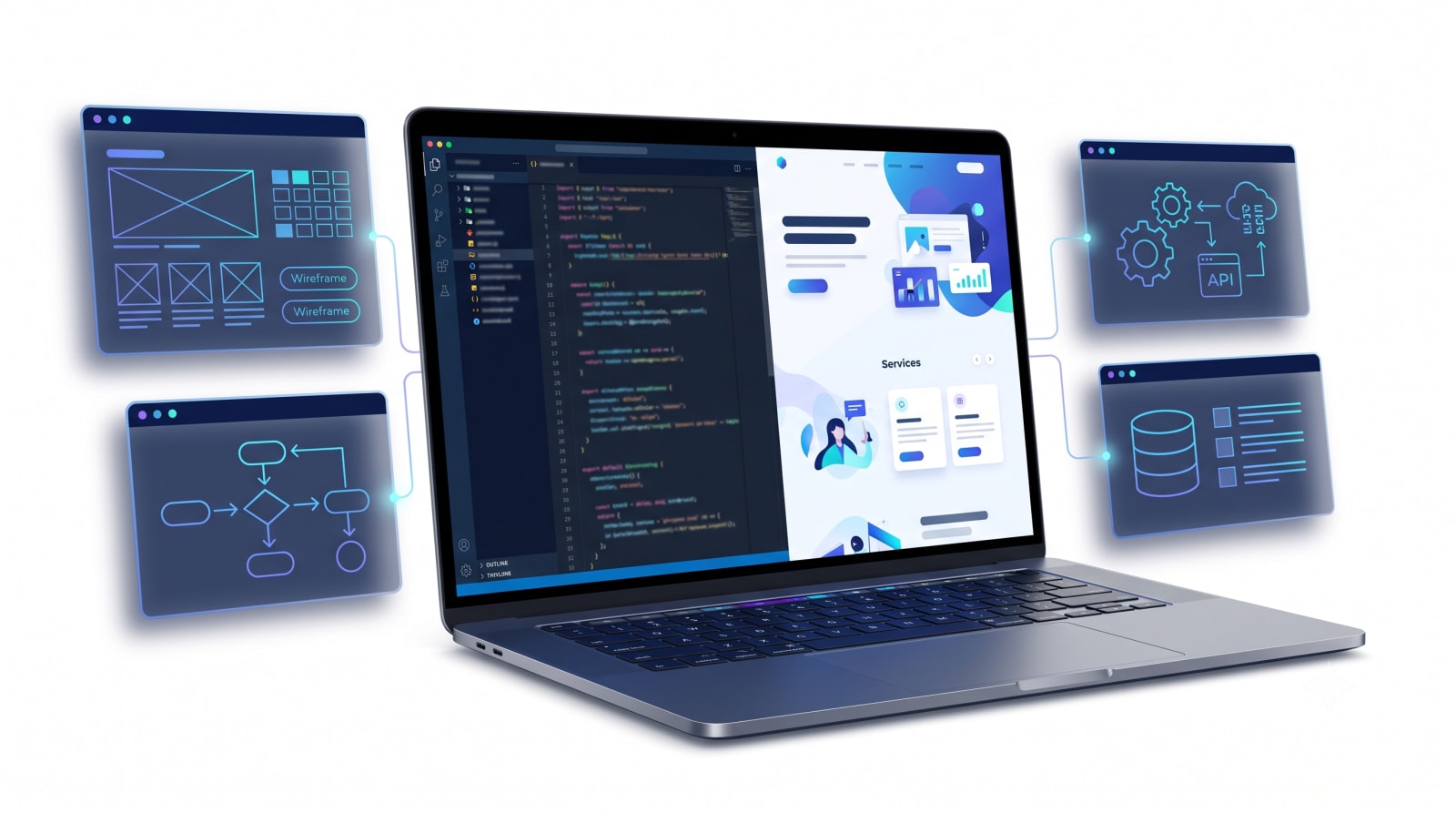
There is no single technology stack that is right for every website.
A simple company website may require a very different setup from a custom web application handling user accounts, payments, and large amounts of data.
Depending on the project, a development team may work with technologies such as:
React or Next.js for modern frontend experiences
TypeScript or JavaScript for application development
Node.js or Python for backend systems
Laravel for PHP-based applications
PostgreSQL or MongoDB for databases
APIs for connecting external services
The important question is not whether an agency uses the latest technology. It is whether the chosen technology is appropriate for your requirements, budget, expected traffic, integrations, and future plans. When evaluating a development partner such as 4Byte Agency, businesses should consider how the proposed technology fits their current requirements and long-term plans.
What Should a Professional Website Include in 2026?
A modern business website should provide more than a visually appealing homepage.
At a minimum, consider:
Clear Business Information
Visitors should quickly understand what you offer, who you serve, and why they should contact you.
Strong Navigation
Users should not have to search through multiple pages to find important information.
Mobile Responsiveness
The website should work properly across smartphones, tablets, and desktops.
Fast Performance
Large images, unnecessary scripts, and poorly optimised code can make a website frustrating to use.
Secure Forms and Integrations
If the website collects customer information or connects to external systems, those processes should be implemented carefully.
Technical SEO Foundations
A development team should consider elements such as page structure, metadata implementation, crawlability, URLs, redirects, mobile usability, and performance.
Analytics and Tracking
Depending on the business, analytics can help identify where visitors come from, which pages they use, and where potential customers leave.
Custom Website or Template: Which Is Better?
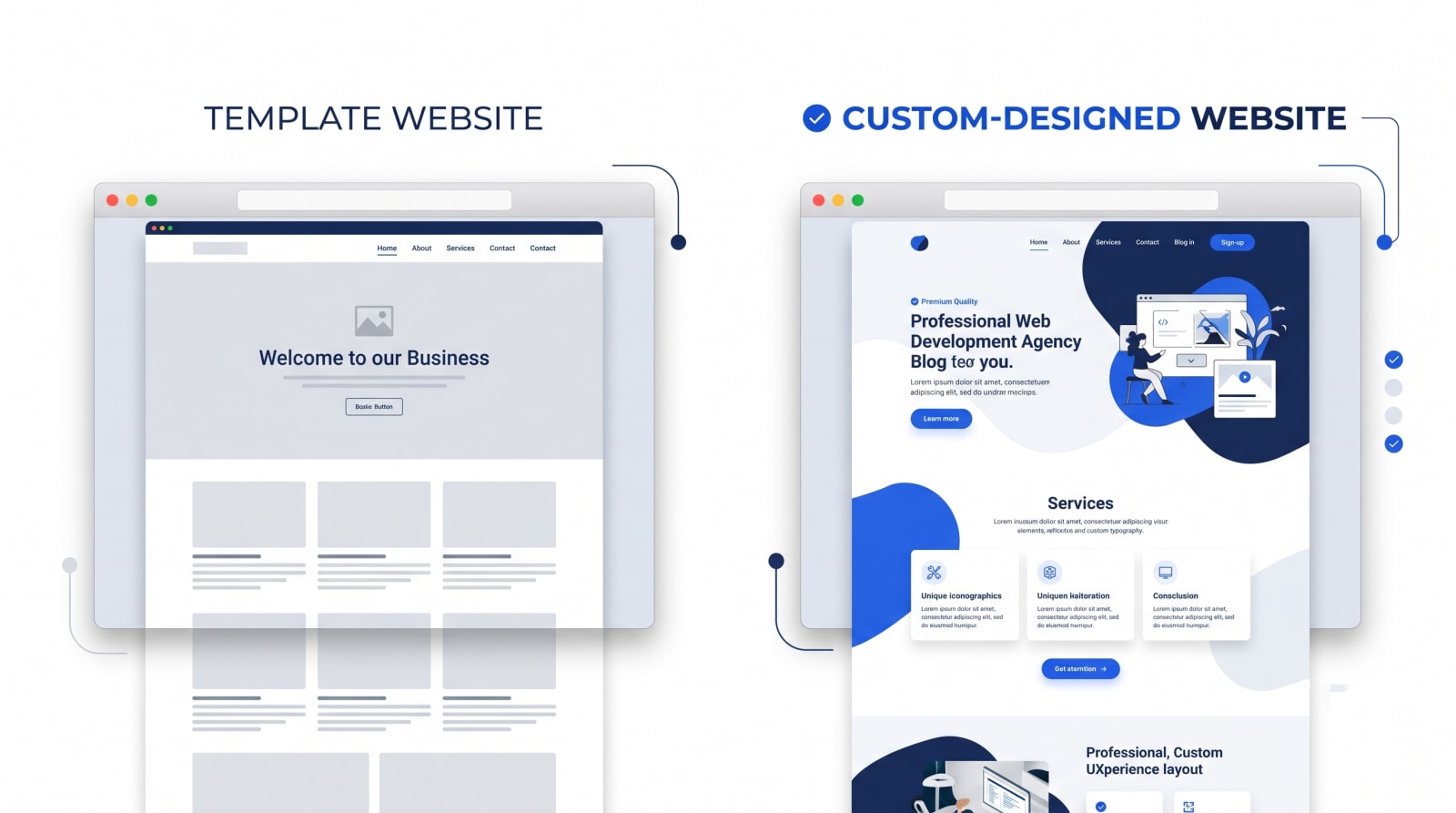
There is no universal answer.
A template-based website can make sense for a small business with straightforward requirements and a limited scope.
A custom website becomes more useful when the business needs:
Unique user experiences
Custom functionality
Third-party integrations
Advanced forms or workflows
Customer dashboards
Ecommerce functionality
Scalable architecture
Connections with internal business systems
The right choice should be based on what the business needs rather than choosing custom development simply because it sounds more advanced.
How Much Does Website Development Cost in Mumbai in 2026?
Website development pricing in Mumbai varies significantly because projects can be completely different in scope.
A basic business website may involve a relatively small number of pages and standard functionality. A corporate website may require dozens of pages, custom design, integrations, animations, CMS functionality, and more extensive testing.
A useful way to think about the cost is:
Project Type | Typical Requirements |
Business Website | Company information, services, contact forms |
Startup Website | Custom design, product positioning, lead generation |
Corporate Website | Larger structure, multiple sections, integrations |
Ecommerce Website | Products, checkout, payments, order management |
Web Application | Accounts, dashboards, databases, custom workflows |
Custom Platform | Complex business logic, integrations, scalable architecture |
Instead of asking only, “How much does a website cost?”, ask what is included in the quotation.
Check whether the price covers design, development, content implementation, integrations, testing, deployment, revisions, maintenance, and future support.
A written scope is particularly important because two agencies can quote very different prices for what appears to be the same website.
How Long Does a Website Project Take?
Timelines depend on the scope.
A straightforward business website can be completed much faster than a custom web application. Delays can also occur when content, design approvals, integrations, or requirements are not ready.
A typical process may look like:
Discovery → Sitemap → Design → Development → Testing → Client Review → Launch
The more complex the project, the more time should be allowed for development and testing.
It is better to agree on realistic milestones than to choose an agency purely because it promises an unusually fast launch.
How Do You Choose the Right Website Development Agency in Mumbai?
Price should not be the only deciding factor.
Before hiring an agency, look at:
Portfolio
Review projects similar to what you want to build. A portfolio can give you an idea of the team's design and development capabilities.
Technical Capability
Make sure the agency can handle the functionality your website actually requires.
Communication
You should know who will manage communication, how often updates will be provided, and how feedback will be handled.
Scope and Pricing
Ask for a written proposal that clearly defines what is included.
Code Ownership
Understand who owns the source code, website assets, domain, hosting accounts, and other project components after completion.
Post-Launch Support
A website still needs attention after launch. Ask what happens if something breaks, an integration stops working, or you need future improvements.
Businesses planning a larger software product should also look beyond website-specific experience and understand how to find a reliable software development company in Mumbai that can support future technical requirements.

What If Your Business Needs an App Later?
A website does not necessarily have to be the final step.
For some businesses, a website is the first stage of a broader digital product. As customer usage grows, the company may eventually need a mobile application development, customer dashboard, booking system, or other digital experience.
For example, an ecommerce company may start with a website and later build a mobile app to improve the customer experience. If that is part of your roadmap, it is useful to consider the relationship between the website architecture and your future app development agency in Mumbai requirements from the beginning.
This does not mean building everything at once. It simply means avoiding decisions that unnecessarily make future development harder.
When Should You Consider AI Automation?
Not every website needs AI automation.
However, businesses handling repetitive enquiries, lead qualification, customer support, appointment requests, internal workflows, or large volumes of routine tasks may eventually benefit from automation.
For example, a website enquiry could trigger an automated workflow that categorises the lead, sends the appropriate response, updates a CRM, and alerts the relevant team member.
If your business is experiencing these kinds of bottlenecks, it may be worth looking at the signs your Mumbai business needs AI automation before manually scaling repetitive processes.
The important point is to identify the actual business problem first and then determine whether automation is an appropriate solution.
What Happens After the Website Goes Live?
Launch day is not necessarily the end of the project.
After deployment, businesses should monitor:
Website performance
Forms and enquiry submissions
Mobile usability
Broken links
Analytics
Security
Third-party integrations
Content updates
Technical issues
A website may also need new pages, feature improvements, integrations, or design changes as the business develops.
This is why it is useful to clarify post-launch support before signing the project agreement.
Why Work With a Mumbai-Based Website Development Agency?
Working with a Mumbai-based development team can make communication and collaboration easier for businesses operating in the city.
Face-to-face meetings may be possible when required, while local teams can also understand the business environment and customer expectations of companies operating in Mumbai.
For businesses that work with customers across India or internationally, location does not have to limit the scope of a development agency. What matters more is the team's ability to communicate clearly, manage projects remotely, and deliver reliable technical work.
Frequently Asked Questions
How much does it cost to hire a website development agency in Mumbai?
There is no single price because costs depend on the number of pages, design requirements, functionality, integrations, technology, and project complexity. A written scope is the best way to compare proposals accurately.
How long does website development take?
A simple business website can take considerably less time than a custom ecommerce platform or web application. The timeline depends on scope, approvals, content readiness, integrations, and testing.
Should I choose a template or custom website?
Templates can work well for straightforward requirements. Custom development is more suitable when your business needs unique functionality, integrations, complex workflows, or a foundation for future digital products.
What should I ask a website development agency before hiring?
Ask about their portfolio, development process, technology, project scope, pricing, timeline, source-code ownership, communication process, and post-launch support.
Can the same agency build my website and mobile app?
Yes, if the agency has the required web and mobile development capabilities. Using one technical partner can sometimes make it easier to maintain consistency across different digital products.
Final Takeaway
Businesses planning a new website or redesign can explore 4Byte Agency's website development services to discuss their project requirements.
The right agency should help you understand what needs to be built, why it needs to be built, how much it should cost, how long it should take, and what happens after launch.
Whether you need a simple business website or a more complex digital platform, focus on scope, usability, technology, communication, ownership, and long-term support. A website built with those factors in mind can serve as more than an online brochure—it can become a practical foundation for the next stage of your business.