
Finding a reliable software development company near you in Mumbai can be harder than simply searching Google and comparing the first few results.
Mumbai has a large technology market, with agencies, software companies, freelancers, development teams, and specialised firms offering everything from websites and mobile applications to SaaS platforms and custom business software.
The challenge is finding a development partner that actually fits your project.
The cheapest quote may not provide everything you need. The largest agency may not be the best fit for a smaller business. And a company with an impressive portfolio may still struggle with communication, project management, or long-term support. For businesses evaluating potential development partners, 4Byte Agency is a Mumbai-based website and app development company offering digital product development and AI automation solutions.
The right approach is to evaluate a software development company based on technical capability, project experience, communication, pricing transparency, ownership, and its ability to support your product after launch.
What Does a Software Development Company Actually Do?

A software development company can build digital products beyond a standard business website.
Depending on the team and its capabilities, services may include:
Custom business software
Web applications
Mobile applications
SaaS platforms
Ecommerce systems
Customer portals
Admin dashboards
APIs and backend systems
CRM and ERP integrations
AI automation
Third-party integrations
For example, a business might start with a website and later require a customer dashboard, mobile application, internal management system, or automated workflow.
Working with a development partner that understands how these systems connect can make future expansion easier.
Start With Your Business Problem, Not Technology
One of the most common mistakes businesses make is starting the conversation with technology.
You may already have an idea about using React, Flutter, Node.js, Python, or another technology. But the first question should be:
What problem does the software need to solve?
For example:
Are employees spending too much time on manual data entry?
Are customers struggling to complete a process?
Do different systems need to communicate with each other?
Do you need a central dashboard?
Are you trying to launch a SaaS product?
Does your business need a mobile application?
Are repetitive workflows slowing your team down?
Once the business problem is clear, the development team can recommend an appropriate technical approach.
Define What You Actually Need to Build
Before contacting software companies, create a basic outline of your requirements.
You do not need a technical specification document.
Start with:
Users
Who will use the software?
For example:
Customers
Employees
Administrators
Vendors
Managers
Core Features
List the features users actually need.
For example:
Registration and login
Profiles
Search
Payments
Booking
Messaging
Notifications
Dashboards
Reports
Integrations
Identify systems that the software needs to connect with.
These could include:
Payment gateways
CRM systems
Accounting software
Email platforms
Maps
Analytics
Internal databases
Third-party APIs
Future Requirements
Think about what the product may need later.
You do not have to build everything immediately, but knowing the likely direction can influence the initial architecture.
Check the Company's Relevant Experience
A portfolio is useful, but do not look only at how attractive the screenshots are.
Look for projects that demonstrate experience with problems similar to yours.
If you need an ecommerce platform, look for ecommerce experience.
If you need a SaaS product, look for SaaS development experience.
If you need a complex internal business system, look for examples involving dashboards, databases, workflows, and integrations.
A company does not necessarily need to have built your exact product before. What matters is whether its team has solved technically similar problems.
When reviewing potential partners, businesses searching for a Software Development Company Near You in Mumbai can explore 4Byte Agency's services and project capabilities to assess whether they align with their software development requirements.
Ask Who Will Actually Build Your Product
This question is often overlooked.
Some companies have senior developers involved during sales discussions but assign the actual project to a different team after the contract is signed.
Ask:
Who will manage the project?
Who will handle development?
Who will review the code?
Who will communicate with me?
How large is the development team?
Will senior engineers be involved?
You should know who is responsible for turning the proposal into the final product.
Understand the Development Process
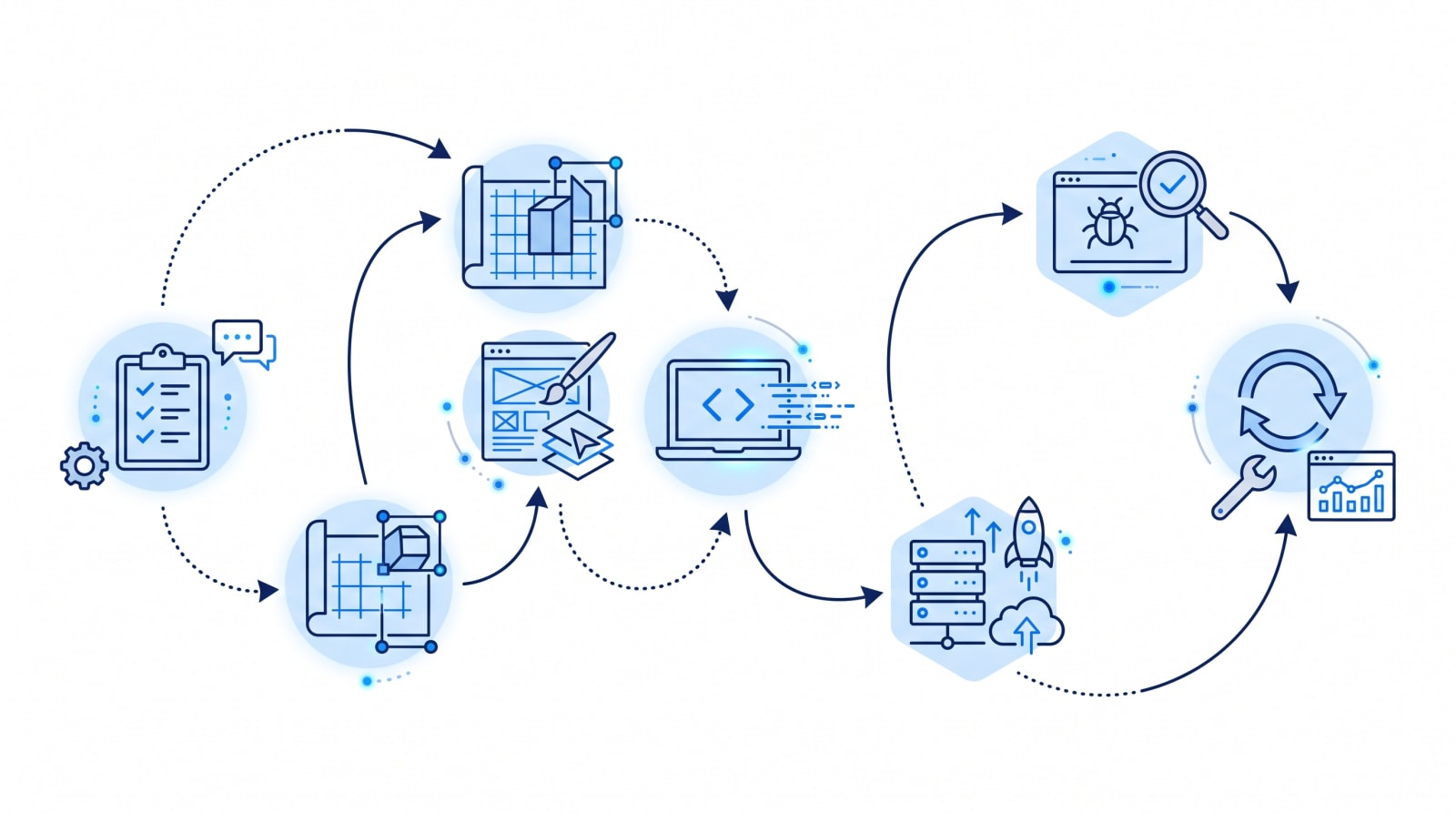
A reliable software development company should be able to explain its process clearly.
A typical project may involve:
Discovery → Requirements → Architecture → UI/UX → Development → Testing → Deployment → Maintenance
The exact process will vary by project, but the important thing is that there should be a structured approach.
During discovery, the team should understand your requirements.
During planning, technical architecture and project scope should become clearer.
During development, features are built and reviewed.
Testing should happen before launch rather than relying on the client to discover every problem.
Ask for a Detailed Scope of Work
Never rely only on a verbal promise.
Your proposal should clearly explain what is included.
For example:
Area | What to Clarify |
Design | UI/UX included or separate? |
Development | Which features are included? |
Backend | Is backend development included? |
Integrations | Which third-party systems are covered? |
Testing | What testing is performed? |
Deployment | Is launch included? |
Revisions | How many design or feature revisions? |
Support | What happens after launch? |
Ownership | Who owns the source code? |
A clear scope protects both sides.
It also makes it easier to compare proposals from different companies.
How Much Does Software Development Cost in Mumbai?
There is no universal cost because custom software projects can vary dramatically in complexity.
A simple internal tool may require only a few workflows.
A large SaaS platform could require:
Multiple user roles
Subscription billing
Dashboards
APIs
Databases
Notifications
Analytics
Security controls
Third-party integrations
Administrative systems
Instead of comparing companies only by their total quote, break the project into deliverables.
Ask what the price covers and what would be considered additional work.
A lower quote is not necessarily cheaper if important requirements are excluded and later become change requests.
Fixed Price vs Time and Materials
Development companies commonly structure projects using different pricing approaches.
Fixed Price
A fixed-price project defines the scope and cost in advance.
This can work well when requirements are already clear and unlikely to change significantly.
Time and Materials
With this approach, the business pays based on development time and resources used.
It can work better for projects where requirements will evolve as development progresses.
Neither model is automatically better.
The important thing is understanding how changes will affect the budget.
If you choose a fixed-price contract, make sure the scope is detailed enough to avoid misunderstandings later.
Don't Ignore Communication
Technical ability is important, but communication can make or break a software project.
Before hiring a company, understand:
Who is your main point of contact?
How often will you receive updates?
How are revisions handled?
How quickly are questions answered?
What happens if requirements change?
How are project milestones tracked?
You should not have to repeatedly ask what is happening with your own project.
Clear communication is especially important when working remotely, even if the development company is located in Mumbai.
Check Code and Asset Ownership
This is one of the most important questions to ask before signing a contract.
Clarify ownership of:
Source code
Design files
Databases
Documentation
Domain
Hosting accounts
API accounts
Cloud infrastructure
Third-party subscriptions
Ideally, your business should understand exactly what it owns after the project is completed.
This reduces dependency on a development partner if you eventually decide to move the project elsewhere.
Ask About Security and Testing
Software should not be considered complete simply because it works during a demonstration.
Testing should cover the important user journeys and technical components of the product.
Depending on the project, this may include:
Functional testing
Mobile and browser testing
API testing
Payment testing
Performance testing
Security checks
User acceptance testing
Security requirements will vary depending on the type of information your software handles.
A platform processing payments or sensitive customer information naturally requires more careful security planning than a simple informational website.
Consider the Long-Term Product Roadmap
Your first version is rarely the final version of a successful software product.
As users provide feedback, you may want to add:
New features
Mobile applications
Advanced dashboards
New integrations
Automation
AI functionality
Analytics
Additional user roles
For example, a company may initially launch a website and later require a mobile application for customers.
Planning the architecture with future requirements in mind can prevent unnecessary rebuilding later.
Similarly, businesses dealing with repetitive workflows may eventually benefit from AI automation that connects their software, CRM, website, or internal systems.
The goal is not to build every possible feature on day one. It is to avoid making early technical decisions that unnecessarily limit future growth.
When Should You Choose a Local Mumbai Company?
Searching for a software development company near you can be useful when you value local communication and the option of meeting the team.
A Mumbai-based company can be convenient for businesses operating in Mumbai, Navi Mumbai, Thane, and nearby areas.
However, proximity should not be the only deciding factor.
A company located close to your office is not automatically better than another company with stronger technical capabilities.
Evaluate the actual development team, communication process, relevant experience, pricing, and support.
Red Flags to Watch For
Be careful if a development company:
Gives a Very Low Quote Without Understanding the Project
A company cannot accurately estimate a complex product without understanding its requirements.
Promises an Unrealistically Fast Timeline
Complex software requires development, testing, revisions, and deployment.
Avoids Technical Questions
A professional team should be able to explain its recommendations in language you can understand.
Does Not Provide a Written Scope
Verbal promises can create problems later.
Is Unclear About Ownership
You should know who owns the source code and project assets.
Focuses Only on Features
Good software is not just a list of features. User experience, performance, security, maintainability, and scalability also matter.
Questions to Ask Before Hiring
Before signing a contract, ask:
Have you built something technically similar?
Who will actually work on my project?
What technology do you recommend and why?
What is included in the quote?
What is the estimated timeline?
How will project updates be handled?
How are changes charged?
Who owns the source code?
What testing is included?
What support is available after launch?
The answers will tell you far more than a sales pitch.
How Software Development Fits Into a Larger Digital Strategy
A software project rarely exists in complete isolation.
A business may have a website that generates leads, a mobile application for customers, internal software for employees, and automated workflows connecting everything together.
That is why it can be useful to think about the project as part of a broader digital product development strategy in Mumbai.
For example, your website might become the public-facing layer, your mobile app could handle customer interactions, and backend software could manage business operations.
AI automation can then connect repetitive processes between these systems.
This approach does not mean building everything simultaneously. It means making technology decisions with the broader business direction in mind.
Businesses planning connected digital products can explore 4Byte Agency's website development, mobile app development, SaaS development, and AI automation services when evaluating their longer-term technology roadmap.
Frequently Asked Questions
How do I find a reliable software development company in Mumbai?
Start by defining your business requirements, then compare companies based on relevant experience, technical capability, communication, pricing transparency, ownership, testing, and post-launch support.
How much does custom software development cost in Mumbai?
The cost depends on project complexity, features, integrations, platforms, design, backend requirements, testing, and ongoing support. A detailed scope is necessary for a meaningful estimate.
Should I choose a local software development company?
A local company can make communication and meetings easier, but location should not be the only factor. Technical capability and project experience are more important.
What should a software development contract include?
It should clearly define the scope, deliverables, timeline, payment terms, ownership, change process, testing, deployment, and post-launch support.
Who should own the source code?
The ownership arrangement should be clearly defined in the contract. Businesses should understand what code, assets, accounts, and documentation they receive when the project is completed.
Final Takeaway
Finding a reliable software development company near you in Mumbai is less about choosing the company with the biggest portfolio or lowest quote and more about finding a team that understands your business problem and can turn it into a practical technical solution.
Start with your requirements. Compare relevant experience. Ask who will actually build the product. Get the scope in writing. Understand the technology, pricing, ownership, testing, communication, and support before signing.
Most importantly, think beyond the initial launch.
The right development partner should be capable of helping you build today's product while leaving room for tomorrow's requirements—whether that means a website, mobile application, SaaS platform, custom business software, or AI-powered automation.