
Hiring an app development agency in Mumbai is a major decision for any business planning to build a mobile product. The first questions are usually straightforward: How much will the app cost? How long will development take? And what will I actually get for the budget?
There is no single price or timeline that applies to every mobile app. A basic business application, ecommerce app, booking platform, and complex SaaS product can require completely different levels of design, development, integrations, testing, and ongoing support.
In 2026, the best approach is to understand what drives the cost before comparing development quotes. A clear scope helps you avoid paying for unnecessary features while also preventing important requirements from being missed.
For businesses building a broader digital product, mobile development should also be considered alongside the website, backend systems, SaaS requirements, and automation that may be needed as the product grows. Businesses exploring mobile app development can learn more about 4Byte Agency, a Mumbai-based website and app development company serving startups and established businesses.
How Much Does App Development Cost in Mumbai in 2026?
The cost of developing a mobile app in Mumbai depends primarily on its complexity.
A simple application with a limited number of screens and basic functionality will require significantly less development work than an application involving payments, real-time communication, maps, user accounts, subscriptions, or complex backend systems.
A useful way to think about the different project levels is:
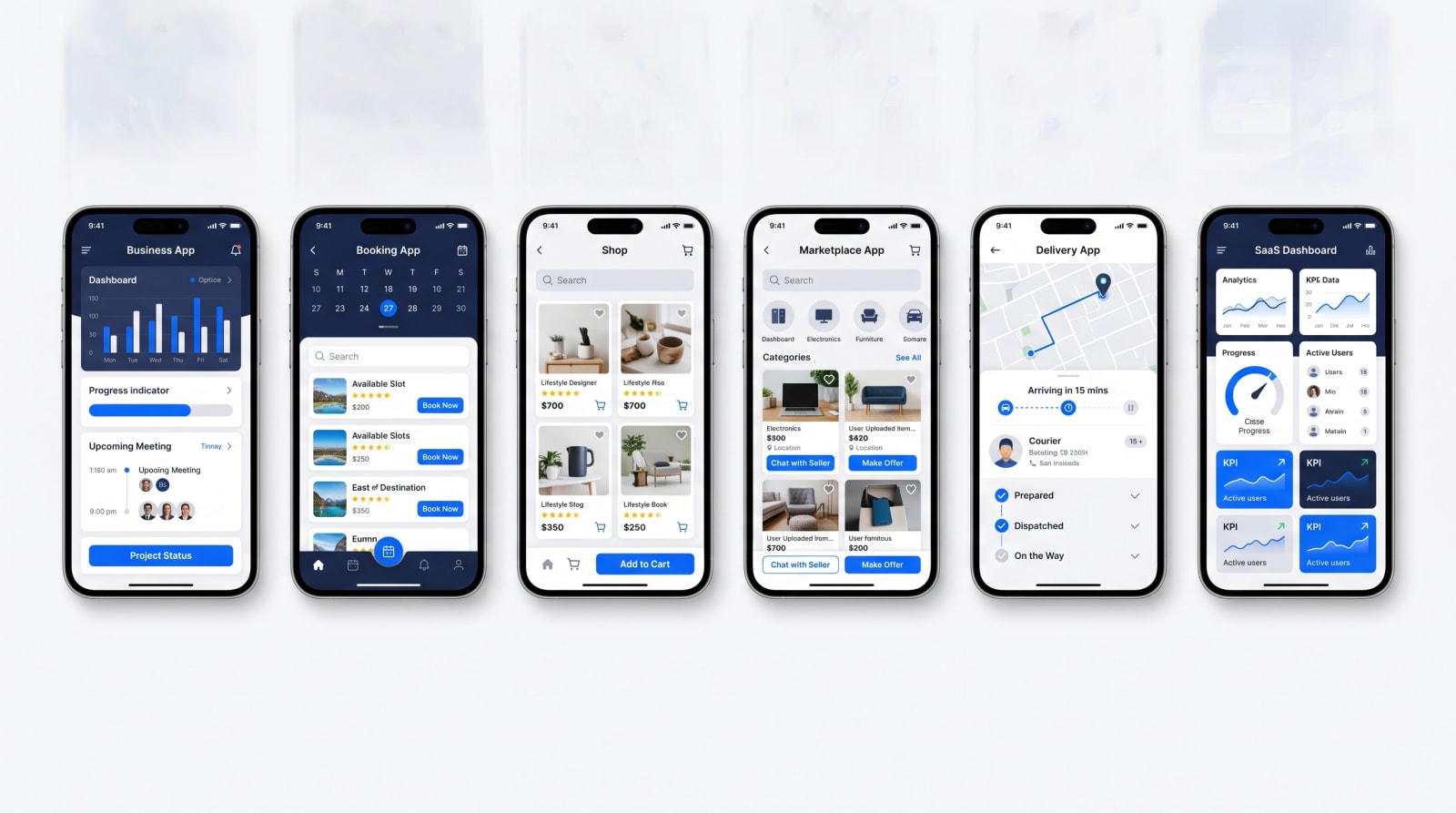
App Type | Typical Requirements | Relative Complexity |
Basic Business App | Information, contact forms, simple content | Low |
Service App | User accounts, bookings, notifications | Low–Medium |
Ecommerce App | Products, cart, payments, orders | Medium |
Marketplace App | Buyers, sellers, listings, transactions | Medium–High |
On-Demand App | Booking, location, payments, real-time updates | High |
SaaS / Complex Platform | Dashboards, subscriptions, workflows, integrations | High |
The final quote should be based on the actual scope rather than simply choosing an agency with the lowest starting price.
What Actually Determines App Development Cost?
4Byte Agency, an app development agency in Mumbai, evaluates project requirements and feature complexity to help businesses define an appropriate development scope. Several factors influence the final cost of a mobile application.
1. Number of Features
Every feature adds design, development, testing, and maintenance requirements.
For example, an app with:
Login
User profiles
Product listings
Search
Payments
Push notifications
Order tracking
Admin dashboard
will require considerably more work than an app containing only static information and a contact form.
This is why a development agency should create a detailed feature list before giving you a final quote.
2. UI/UX Design
The design process is another important part of development.
A basic application may need relatively straightforward screens, while a more sophisticated product may require:
User journey mapping
Wireframes
Custom interface design
Interactive prototypes
Design systems
Multiple user flows
Mobile-specific interactions
Good UX is not simply about making an application look attractive. It should make important actions easy to understand and complete.
3. Platform Choice
You also need to decide whether the application will be built for:
iOS
Android
Both iOS and Android
Building separate native applications can require more development resources because different codebases may need to be maintained.
Cross-platform technologies can allow businesses to build applications for multiple platforms using a shared development approach.
The right choice depends on the product, performance requirements, device-specific features, development budget, and long-term roadmap.
4. Backend Development
The mobile application is only one part of the system.
If users need accounts, orders, payments, dashboards, databases, or personalised information, a backend is required to process and store that data.
Depending on the product, backend development may include:
APIs
Databases
Authentication
User management
Payment processing
Admin systems
Notifications
Data storage
Third-party integrations
For many applications, backend complexity has a significant impact on both cost and timeline.
How Long Does App Development Take in Mumbai?
There is no universal development timeline.
A simple application with limited functionality can move from planning to launch relatively quickly. A complex application with multiple user roles, integrations, payments, and backend workflows can take considerably longer.
A typical development process looks like:
Discovery → Planning → UI/UX Design → Development → Integration → Testing → Launch
The timeline also depends on how quickly the client provides content, approves designs, answers technical questions, and provides access to third-party systems.
A Simple Timeline Example
A basic project may follow a structure such as:
Week 1–2: Discovery, requirements, and planning
Week 2–4: UI/UX design and approval
Following weeks: Frontend and backend development
Final stage: Testing, bug fixing, deployment, and store submission
More complex applications may require several additional development and testing cycles.
The important point is that an agency should provide milestones rather than simply saying, “Your app will be ready in X days.”
What Happens Before App Development Begins?
A professional app development project should begin with discovery.
Before writing code, the development team should understand:
Who will use the app?
What problem does it solve?
What platforms are required?
What features are essential?
What can wait until a later release?
Will the app require payments?
Are there multiple types of users?
Does it require a backend?
Which third-party services are needed?
What will the admin team need to manage?
This stage is important because unclear requirements are one of the easiest ways for project scope and costs to increase later.
Should You Build an MVP First?

For many startups and businesses, building everything at once is unnecessary.
An MVP, or minimum viable product, focuses on the core functionality required to launch and test the idea.
For example, instead of launching a marketplace with dozens of features, the first version might focus on:
User registration
Product or service listings
Search
Basic transactions
Order management
Essential notifications
Once real users start interacting with the product, the business can identify which features deserve further investment.
An MVP does not mean building a poor-quality application. It means controlling the initial scope so the business can validate the core product before expanding it. Businesses planning an MVP can discuss their initial feature requirements and future roadmap with 4Byte Agency before committing to a larger development scope.
Native vs Cross-Platform App Development
One of the common decisions businesses face is whether to build native applications or use cross-platform development.
Native Development
Native apps are developed specifically for a particular operating system.
For example, iOS and Android can have separate native codebases.
This approach can be useful when the application requires highly platform-specific functionality or very specialised performance requirements.
Cross-Platform Development
Cross-platform frameworks allow developers to build applications for multiple platforms using a shared development approach.
This can be useful for businesses that want to launch on both iOS and Android while keeping development more streamlined.
Neither option is automatically better.
The decision should be based on the application's functionality, performance requirements, budget, development strategy, and future maintenance needs.
What Features Can Increase Development Cost?
Some features require considerably more engineering work than others.
Examples include:
Real-Time Location
Ride-hailing, delivery, logistics, and field-service applications may require maps, location tracking, routing, and real-time updates.
Payment Systems
Payment functionality requires secure integration with payment providers and careful handling of transaction states.
Chat and Messaging
Real-time communication may require additional infrastructure for conversations, notifications, media, and message delivery.
Multiple User Roles
A marketplace might have customers, vendors, delivery partners, and administrators. Each role can require different screens and permissions.
AI Features
AI-powered recommendations, assistants, document processing, or content generation can introduce additional APIs, backend logic, data handling, and monitoring requirements.
Third-Party Integrations
Connecting an app to CRMs, ERPs, payment gateways, analytics systems, maps, or other external platforms can add development and testing work.
Don't Forget the Admin Panel
One common mistake is focusing entirely on the customer-facing mobile application.
Many apps also require an administrative dashboard where the business can:
Manage users
Update products or services
Process orders
View transactions
Manage content
Handle customer requests
Monitor activity
Manage permissions
The admin system can become an important part of the total project scope.
If an agency's quote covers only the mobile interface but does not clearly explain the backend and administration system, ask questions before signing the agreement.

How to Choose an App Development Agency in Mumbai
Choosing the right development partner is about more than comparing prices.
Review Relevant Experience
Look for projects involving functionality similar to yours.
An agency that has built basic business websites may not automatically have the experience needed for a complex mobile platform.
Ask About the Technology
You should understand what technology will be used and why.
The development team should be able to explain technical decisions in business terms rather than simply listing programming languages.
Get a Detailed Scope
Your proposal should clearly identify:
Features
Platforms
Design work
Backend development
Integrations
Testing
Deployment
Post-launch support
Understand Ownership
Ask who owns the source code, design files, accounts, and other project assets after completion.
Discuss Future Development
Your first version may not be your final product.
If the app succeeds, you may need new features, additional integrations, performance improvements, or an entirely new product layer.
For businesses that already have or are planning a website, choosing a partner capable of handling both sides can also make the overall website development process easier to coordinate.
How Does App Development Connect With AI Automation?
Mobile applications increasingly interact with automated business processes.
For example, an app could automatically:
Categorise customer requests
Send personalised notifications
Route leads
Generate summaries
Update a CRM
Trigger internal workflows
However, AI should not be added simply because it is trending.
The better approach is to identify repetitive tasks or customer problems first and then determine whether automation actually improves the experience.
For businesses evaluating this opportunity, understanding the signs your Mumbai business needs AI automation can help determine whether automation belongs in the current product or a future stage.
What Should Be Included in Your App Development Quote?
Before approving a proposal, make sure the quotation clearly explains what you are paying for.
A good proposal should cover:
Product scope: What exactly will be built?
Platforms: iOS, Android, or both?
UI/UX: Are design and prototypes included?
Backend: Is the server-side system included?
Admin panel: Will your team have a dashboard?
Integrations: Which external services are included?
Testing: What type of testing will be performed?
Deployment: Is app-store submission included?
Maintenance: What happens after launch?
Source code: Who owns the final code?
This level of clarity makes it much easier to compare agencies fairly.
What Happens After the App Launches?
App development does not necessarily end when the application reaches the App Store or Google Play.
Post-launch work may include:
Bug fixes
Security updates
Performance improvements
OS compatibility updates
New features
Analytics review
Server maintenance
Third-party integration updates
Mobile operating systems continue to evolve, so applications may require ongoing technical attention.
For businesses building a long-term product, choosing a development partner that can support future versions can be more valuable than selecting the cheapest initial quote.
Frequently Asked Questions
How much does it cost to build an app in Mumbai in 2026?
The cost depends on the application's features, design complexity, platforms, backend requirements, integrations, and testing needs. A simple app can cost far less than a complex marketplace, ecommerce platform, or SaaS application.
How long does it take to develop a mobile app?
The timeline depends on scope and complexity. A basic app may require a shorter development cycle, while applications with multiple user roles, payments, real-time functionality, or complex backend systems can take considerably longer.
Is it cheaper to build one app for both iOS and Android?
Cross-platform development can reduce duplicated development work, but the best approach depends on the application's technical requirements. Native development may still make sense for certain products.
Should a startup build an MVP?
An MVP can be a practical approach when the goal is to validate the core idea before investing in a larger feature set. The MVP should still provide a reliable experience rather than simply being the cheapest possible version.
What should I ask an app development agency before hiring?
Ask about relevant experience, technology, project scope, timeline, development process, ownership, testing, deployment, integrations, and post-launch support.
Final Takeaway
The cost and timeline of mobile app development in Mumbai in 2026 depend far more on what you are building than simply where you are building it.
Before requesting quotes, define your users, core features, platforms, integrations, backend requirements, and long-term goals. Then ask development agencies to break their proposals down into clear deliverables and milestones.
A good app development project is not about finding the lowest quote or the fastest promised launch. It is about creating a realistic scope, choosing appropriate technology, building the essential features properly, testing them thoroughly, and leaving room for the product to evolve.
For businesses planning a larger digital ecosystem, the app should also fit into the wider website, software development, SaaS, and automation strategy rather than being developed as an isolated product.
Businesses planning a custom mobile application can explore 4Byte Agency's mobile app development services to discuss their product requirements and development goals.